A healthy catalytic converter or diesel particulate filter (DPF) keeps the air cleaner and your engine running smoothly. When either starts to clog or break down, the car will tell you long before it quits. Here are the five signs our technicians watch for in Spring Valley, what they mean, and how we confirm the real cause before you spend money on parts.
1. Power Feels Choked, Especially on Hills
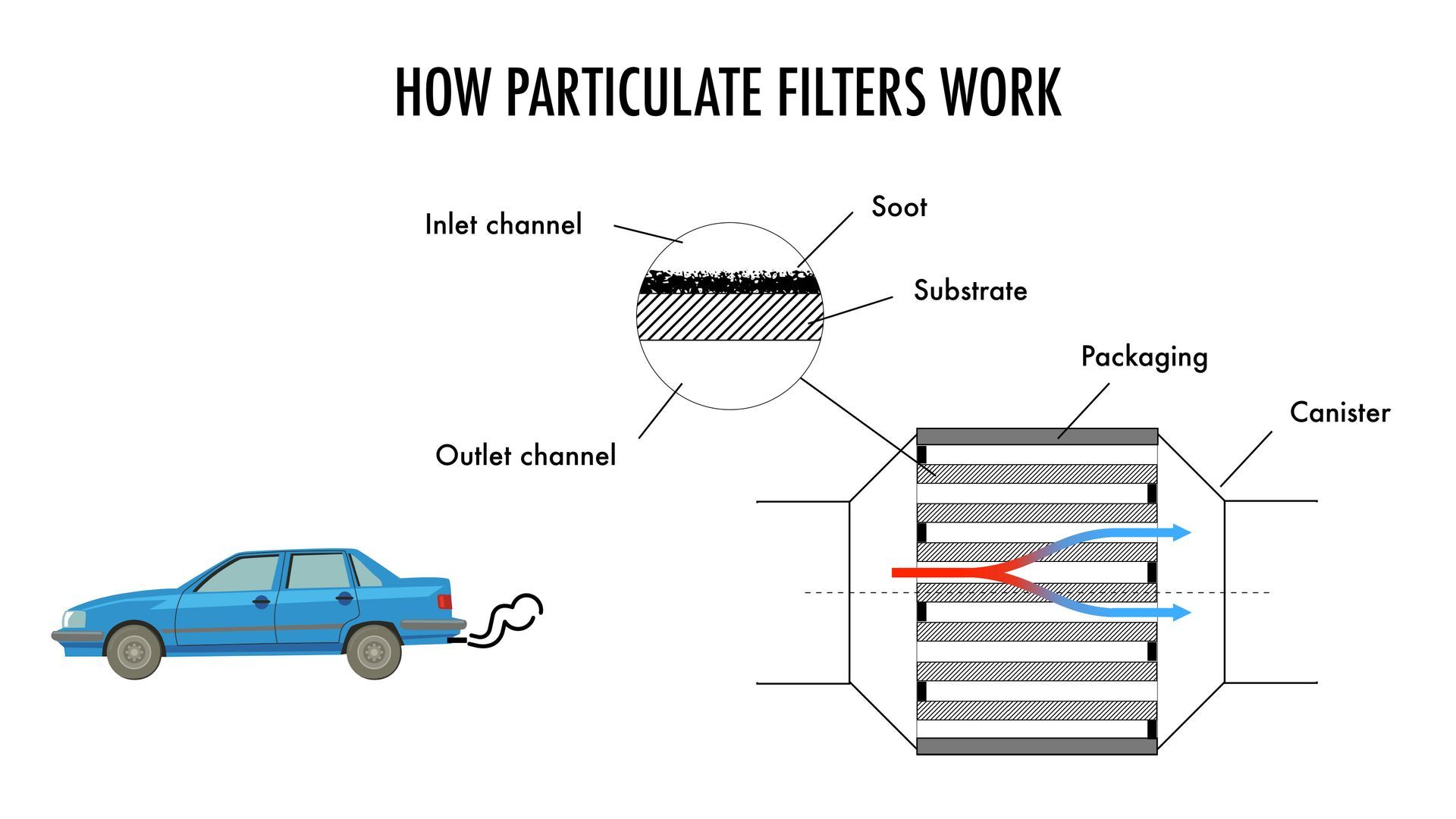
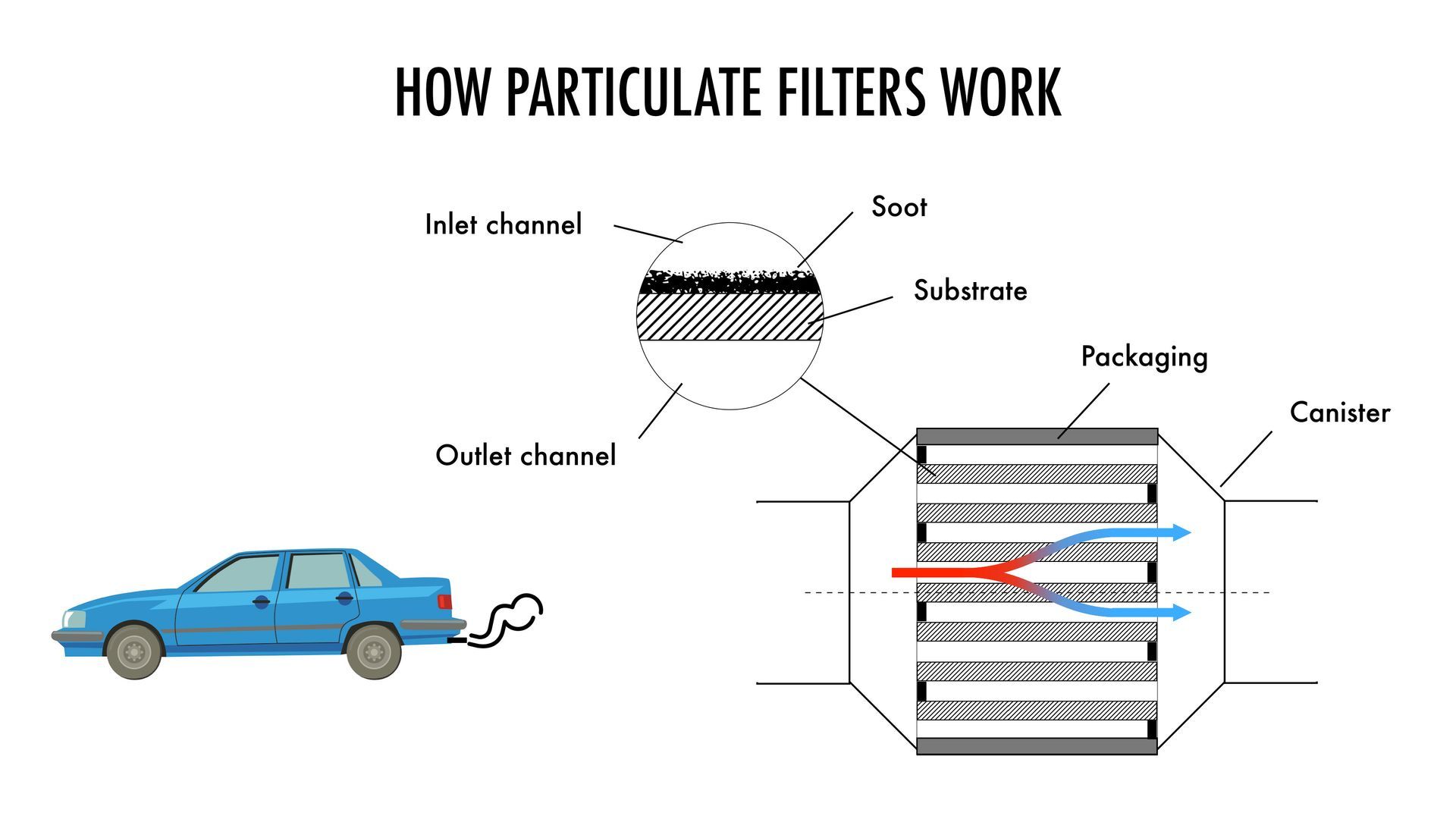
If the vehicle struggles to accelerate, feels flat above 2,500 rpm, or needs more throttle to hold speed on the 94, backpressure may be building. A clogged catalyst or a soot-loaded DPF restricts exhaust flow, which makes the engine work harder to breathe out. You might also notice a deeper exhaust note or a whooshing sound from under the car.
We compare upstream and downstream pressure, and on diesels, we check differential pressure across the DPF. If numbers rise with rpm, restriction is likely.
2. Rotten Egg Smell or Excessive Heat From the Floor
A sulfur or rotten egg odor often points to a catalyst that is overwhelmed by rich running or contaminated fuel. In some cases, the converter overheats, which can make the floorboard feel hot after a long pull.
Diesels with frequent failed regenerations can cook the DPF as well. Heat means act now. We scan live fuel trims, misfire counters, and temperature sensors to see whether the exhaust is being loaded with raw fuel. Fixing the cause protects a good converter from becoming a bad one.
3. Check Engine Light With Efficiency or Soot Load Codes
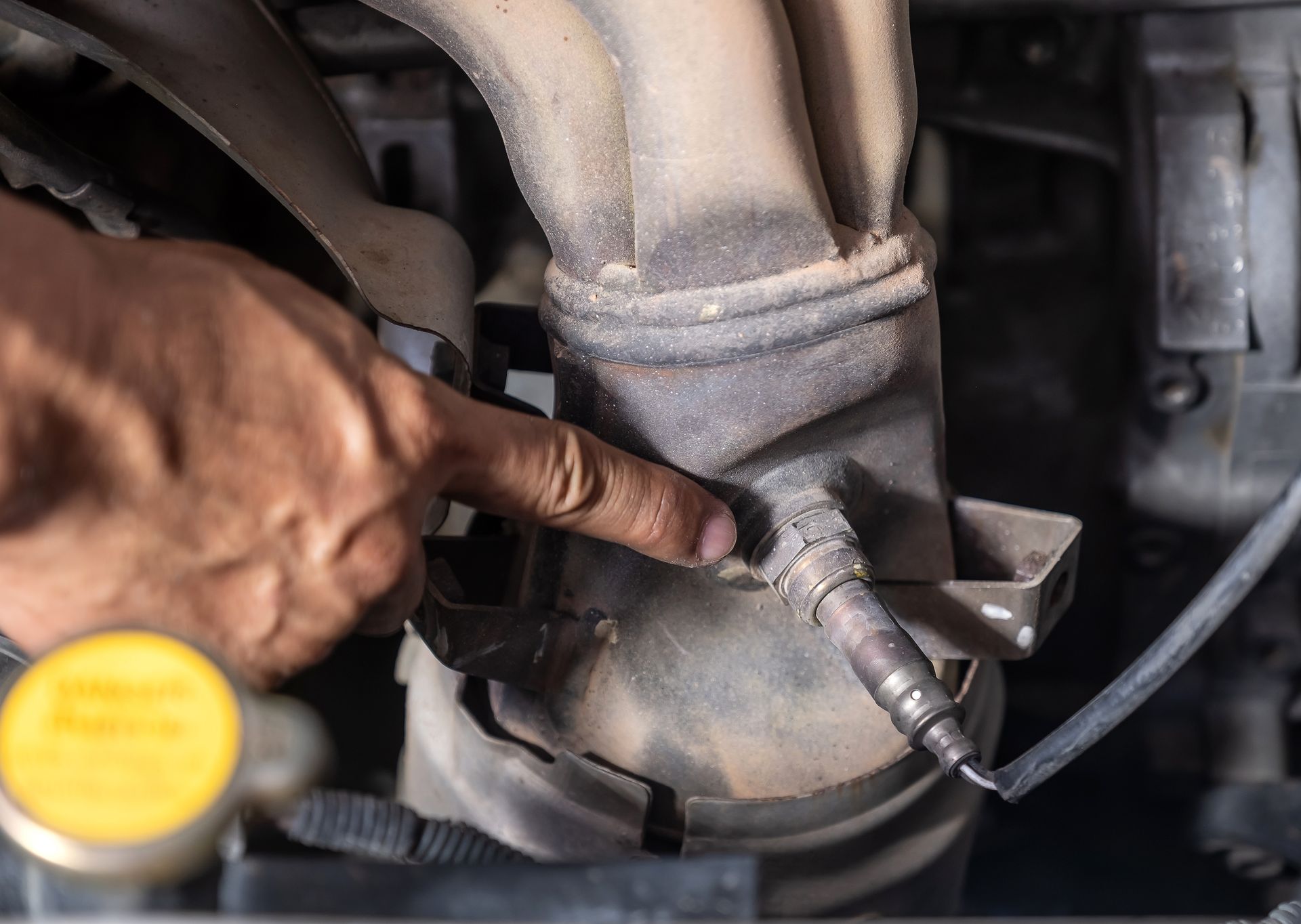
Common gas codes include P0420 or P0430 for low catalyst efficiency. Diesels often throw DPF efficiency or excessive soot load codes and may limit power to protect components. Codes alone do not prove the converter is bad. Misfires, vacuum leaks, leaky injectors, or a weak oxygen sensor can fool the monitor.
Our technicians look at oxygen sensor switching, downstream sensor stability, and, for diesels, the regeneration history, miles since last regen, and ash versus soot load to separate a sensor problem from a real converter or DPF issue.
4. Rough Idle, Stalling, or Hard Hot Restarts
When a converter breaks up internally, pieces can shift and intermittently block flow. That can cause a rough idle, a stall coming to a stop, or a hard restart after a short heat soak at the grocery store. Diesels with a nearly full DPF may idle normally but feel like they hit a wall under steady throttle.
We perform a quick vacuum test or backpressure test at the upstream oxygen sensor port, and on diesels we compare commanded versus actual regeneration to see whether the filter is accepting a regen as it should.
5. Failed Smog Pre-Check or Visible Smoke
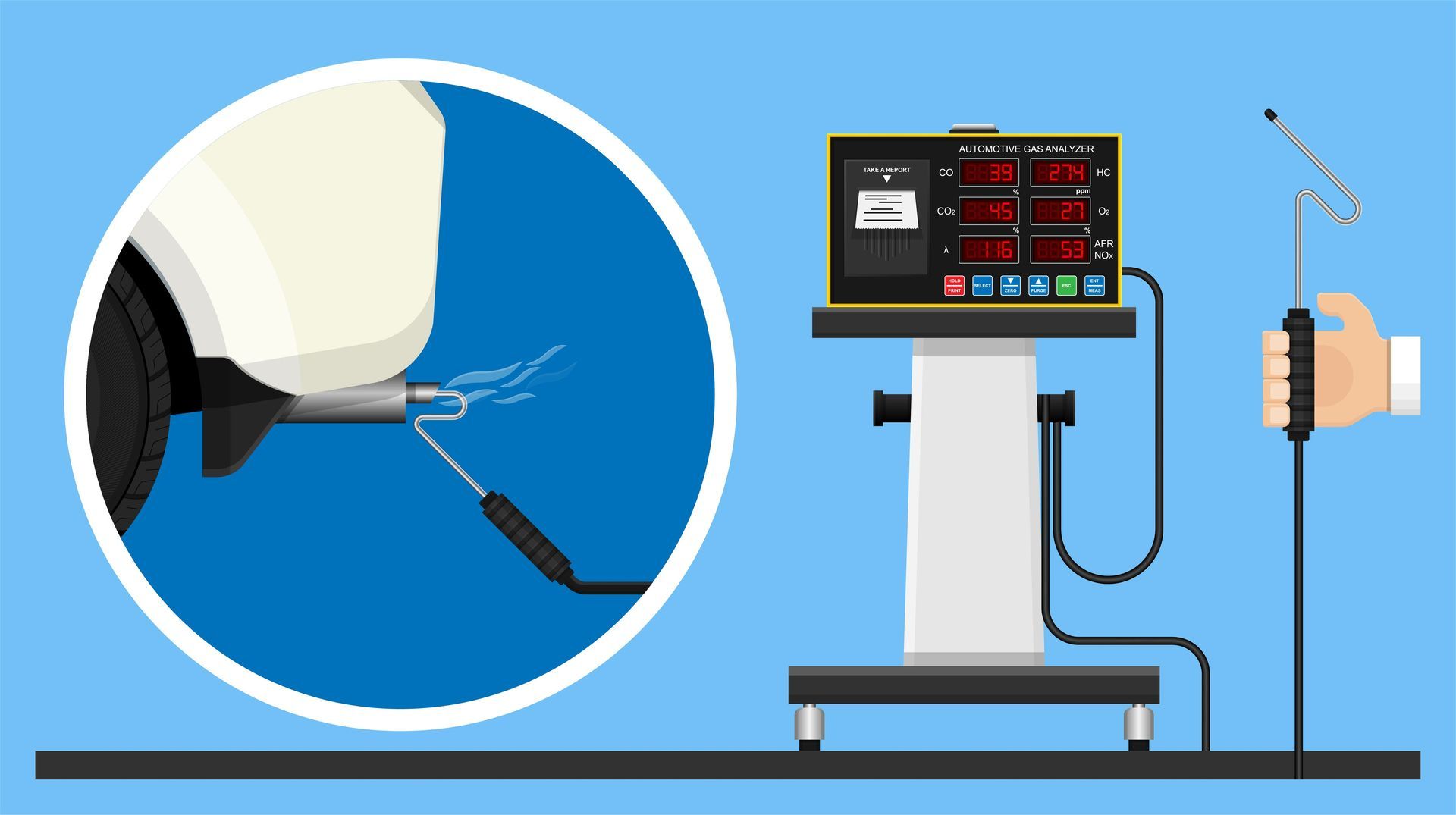
In California, a tired catalyst often shows up during a pre-test with high HC or CO at idle or 2,500 rpm, even when the car seems to drive fine. On diesels, white or blue smoke points to oil or fuel issues that can quickly plug a DPF, while steady black smoke suggests a fueling or boost problem.
If smoke appears during DPF regens, that is a clue that something upstream is wrong. We conduct a thorough intake, PCV, and turbo check to prevent the contamination that caused the first filter to fail before discussing replacement options.
How to Confirm the Root Cause
Replacing a converter or DPF without fixing what damaged it leads to a repeat visit. Our process keeps you from buying parts twice:
- Verify the complaint with a road test and baseline backpressure or differential pressure.
- Scan for codes, then read freeze frame and live data for fuel trims, oxygen sensor action, EGT sensors, and regen status.
- Check for misfires, intake leaks, sticking EGR valves, oil consumption, or rich fueling that overloads the catalyst.
- On diesels, evaluate forced regeneration capability and ash loading to decide between cleaning, service, or replacement.
- Only when restriction or core failure is proven do we recommend a new converter or DPF.
Can You Keep Driving or Should You Tow
If the car feels severely down on power, smells strongly of sulfur, or the underbody is getting hot, play it safe and tow. Continued driving can melt the substrate or damage wiring and shields nearby. If the light is on but the vehicle runs normally, you can usually drive to the shop.
For diesels stuck in reduced power with a full DPF, avoid highway pulls and schedule service soon so we can attempt a controlled regen before the filter is beyond saving.
Get Professional Catalytic Converter and DPF Service in Spring Valley with Ed Hanson’s Muffler Service
If you are noticing slow climbs, sulfur smell, efficiency or soot codes, or heat under the floor, bring your vehicle to our Spring Valley shop. We will test backpressure, verify sensor data, repair the cause, and replace the converter or DPF only when it is truly needed.
Schedule an appointment and leave with a quiet dash, restored power, and emissions gear that will last.